Request Toolset Access
Evidence & documentation tooling

Turn security paperwork into traceable evidence.

Practical templates and evidence workflows for regulated teams that need clear system narratives, control to evidence mapping, and remediation tracking. Personal commercial product, not a government service and not offered as federal assessment preparation.

Map
Control mapping
SSP
Narrative Support
POA&M
Remediation Track
Local
Templates & workflows
SSP Builder
Evidence Mapper
POA&M Tracker
Evidence First
Regulated Teams
Built for documentation discipline
System narratives
Evidence to control mapping
Template workflows
Personal commercial product
The Challenge

The compliance paperwork trap is real.

Many regulated organizations struggle not because they lack security controls, but because they cannot connect operational reality to the language of their documentation requirements.

馃搲
Vague CRM Failures
The fastest path to a bad shared responsibility outcome is inheriting cloud services without a precise Customer Responsibility Matrix (CRM). Vague templates cannot cover your actual boundaries.
馃攳
Where is the Proof?
If a reviewer asks for evidence of a control (like multifactor authentication logs) and your team takes two hours to find it, that signals a lack of control maturity. Evidence must be organized and mapped.
馃搮
The POA&M Backlog
Remediation items sit in spreadsheets without milestones, clear owners, or risk impact. A formal review wants to see a live, dynamic Plan of Action & Milestones (POA&M) that is actively managed.
The Story

Built for evidence discipline, not theater.

Evidence Toolset was developed by Barry Morgan, a U.S. Navy Submariner weapons technician with 20+ years of enterprise systems and security experience. The product helps teams organize system narratives, evidence, and remediation tracking in one place so documentation matches how the environment actually works.

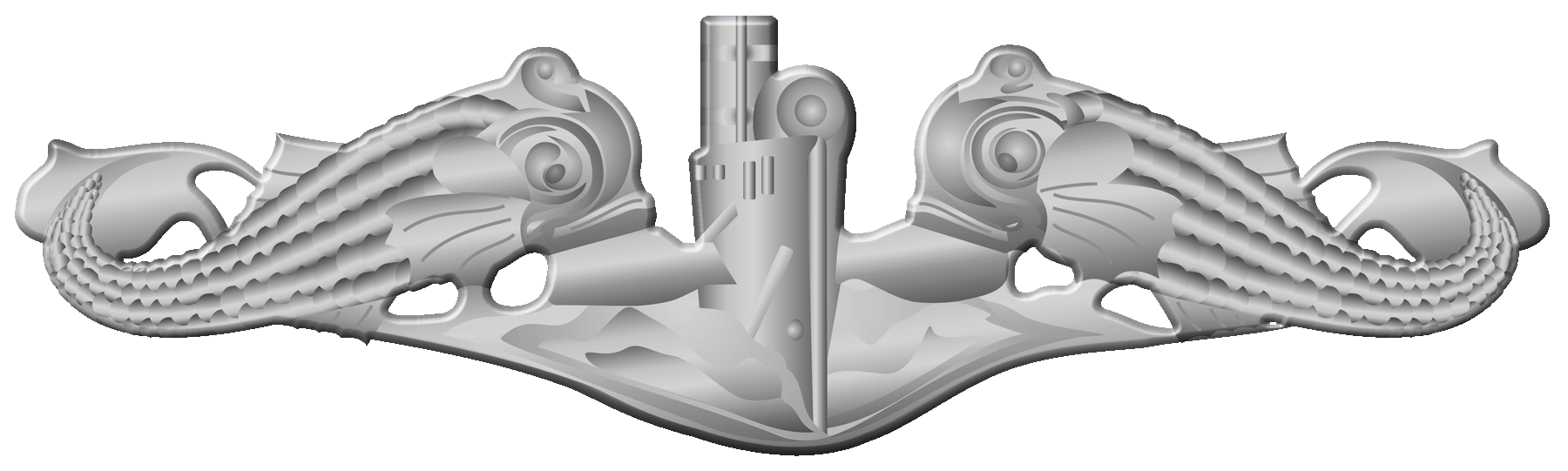
U.S. Navy Enlisted Submarine Warfare Insignia (Silver Dolphins)
Submarine Warfare Qualified: systems walkthroughs and board review

After watching teams spend months on generic templates that still did not map cleanly to their systems, Barry built a practical toolkit focused on traceability: each claim points back to real evidence.

"Evidence Toolset helps technical and compliance teams organize evidence so documentation matches operations, not a stack of disconnected PDFs."
The Toolset

Operational documentation tools.

We don't give you simple PDF checklists. We give you structured tools designed to organize evidence, draft defensible narratives, and speed up audit preparation.

Core Artifact
SSP Narrative Builder

A structured repository to gather system components, network boundaries, sensitive data flow, and control narratives to compile a defensible System Security Plan.

Traceability
Control Evidence Mapper

Tie policy documents, technical exports, configuration screenshots, and procedures directly to the specific control requirements they support.

Remediation
POA&M Tracker

A dynamic dashboard to turn compliance gaps into practical remediation tasks with milestones, owners, and estimated cost tracking.

Boundary
Scope & Boundary Checklist

Structured prompts to document system boundaries, data flows, and asset inventory so your narrative, diagram, and inventory stay consistent.

The Workflow

The Evidence first approach to readiness.

Traditional compliance asks you to write policies first. We ask you to locate and map evidence first, ensuring your policies accurately match your technical boundaries.

Step 1
Scope & Boundary Definition
Identify users, sensitive data flow, assets, and boundaries

Establish where sensitive regulated data enters, resides, and exits your system. Define clear system boundaries before drafting any controls to avoid scope creep or gaps.

Sensitive data flow Asset Inventory Shared Responsibility
Step 2
Evidence Collection & Mapping
Collect once, map to multiple objectives

Upload configuration screenshots, AD exports, group policy settings, and standard operating procedures. Link each piece of evidence to one or more documented control objectives.

Evidence Repository Objective Linkage Traceability Matrix
Step 3
SSP Synthesis & Remediation
Generate assessment ready documentation

Draft and refine your control implementation narratives based on collected evidence. Flag missing evidence or control failures as immediate items in the Plan of Action and Milestones (POA&M).

SSP Export POA&M Generation Gap Verification
About

Built for traceable documentation.

Evidence Toolset is a personal commercial product. It helps regulated teams keep system narratives, evidence, and remediation work organized. It is not a government product, does not provide federal assessment services, and is not sold as preparation for government assessments.

Barry Morgan is a U.S. Navy Submariner weapons technician with 20+ years of enterprise systems and security experience. Paper certifications are not the product; usable documentation discipline is.

High assurance background
Background supporting high assurance and regulated environments
Silver Dolphins Insignia
Qualified in submarines
Attained through cross functional systems walkthroughs and a rigorous evaluation board
FTB MT
U.S. Navy Submariner | Weapons Department
USS Casimir Pulaski (SSBN 633) & USS Ohio (SSBN 726) 路 Trident C-4 systems

Methodology Coverage

What it covers
Control objectives Evidence packages Contract security needs Remediation tracking
Documentation workflows
Evidence mapping Boundary consistency Narrative structure Remediation tracking
Technical Proof
Scope Boundaries Sensitive data flow Evidence Traceability POA&M Management
Evidence Strategy

How SSP evidence organization actually works.

A System Security Plan is not a Word document with checkboxes. A well structured SSP is a living document that maps every documented security control to three things: an implementation description that explains precisely how your organization satisfies the control, a list of the responsible parties who own the implementation, and a reference to the evidence that proves the control exists and functions as described. The evidence reference is what separates a compliant SSP from a decorative one. Saying "we use multifactor authentication" in a narrative is not sufficient. The evidence must show that MFA is configured, enforced, and logged, and point to the specific configuration screenshots, policy documents, or system reports that demonstrate each of those three things.

Evidence mapping is the most time consuming part of compliance preparation for most organizations, and the most common source of assessment failures. Teams spend weeks writing narrative descriptions of their controls and neglect to build the evidence package that supports those descriptions. During a formal review, when a reviewer asks to see the evidence for a multifactor authentication control, a team that hasn't preorganized their evidence scrambles through screen recording archives, email threads, and system admin portals in real time, while time is limited. Evidence Toolset's evidence mapping module builds that evidence to control relationship during SSP development, not as a last minute scramble before a formal review.

Boundary documentation is the evidence category that trips up organizations most consistently. The review boundary, the set of systems that process, store, or transmit sensitive regulated data, must be explicitly defined and consistently documented across the SSP, the network diagram, and the asset inventory. When those three documents describe different boundaries, reviewers treat the discrepancy as a finding that requires explanation. The explanation that the SSP was written before the latest network change is not accepted as a control satisfaction, it's a gap that requires remediation. Evidence Toolset's boundary consistency check compares SSP narrative, network diagram labels, and asset inventory records to flag mismatches before they become review findings.
The Assessment

What formal reviews check first.

Formal reviews conducted by independent review teams follow a specific sequence. Day one typically begins with an opening meeting where the review team confirms scope, reviews the organization's completed SSP and associated policy documents, and establishes the schedule for the on site or remote review activities. The SSP is read before the review begins, reviewers often arrive having already reviewed the narrative and identified the controls they most want to verify. Going into Day 1 without a complete, internally consistent SSP is the equivalent of showing up to a final exam without having studied: the test is the same, but your preparation is not.

After the opening meeting, review teams typically move directly to the highest risk control domains: access control, identification and authentication, and system and communications protection. These three domains contain controls that, if not properly implemented, create pathways for unauthorized access to sensitive regulated data. The access control review involves examining Active Directory or equivalent IAM system configurations, reviewing privileged account lists against approved user rosters, and testing that account deprovisioning procedures have been followed for recently departed employees. Organizations that haven't run a quarterly access review in 18 months routinely find orphaned accounts during this check.

Configuration management is reviewed through a combination of policy review and technical spot checks. Reviewers look at your baseline configuration documentation and then compare it to the actual running configuration on sampled systems. If the baseline says all Windows endpoints run with PowerShell execution policy set to Restricted but a sampled workstation shows RemoteSigned, that's a finding under a baseline configuration control. Evidence Toolset's configuration management module generates baseline configuration snapshots and comparison reports so organizations know before the review arrives whether sampled systems match the documented baseline. Knowing your gaps in advance is the entire strategy for a clean review outcome.

The Invitation

Request Toolset Access

Whether you are a regulated organization improving documentation, or a consultant managing multiple client packages, let us know how we can support your compliance readiness workflow.

SELECT AREAS OF INTEREST: